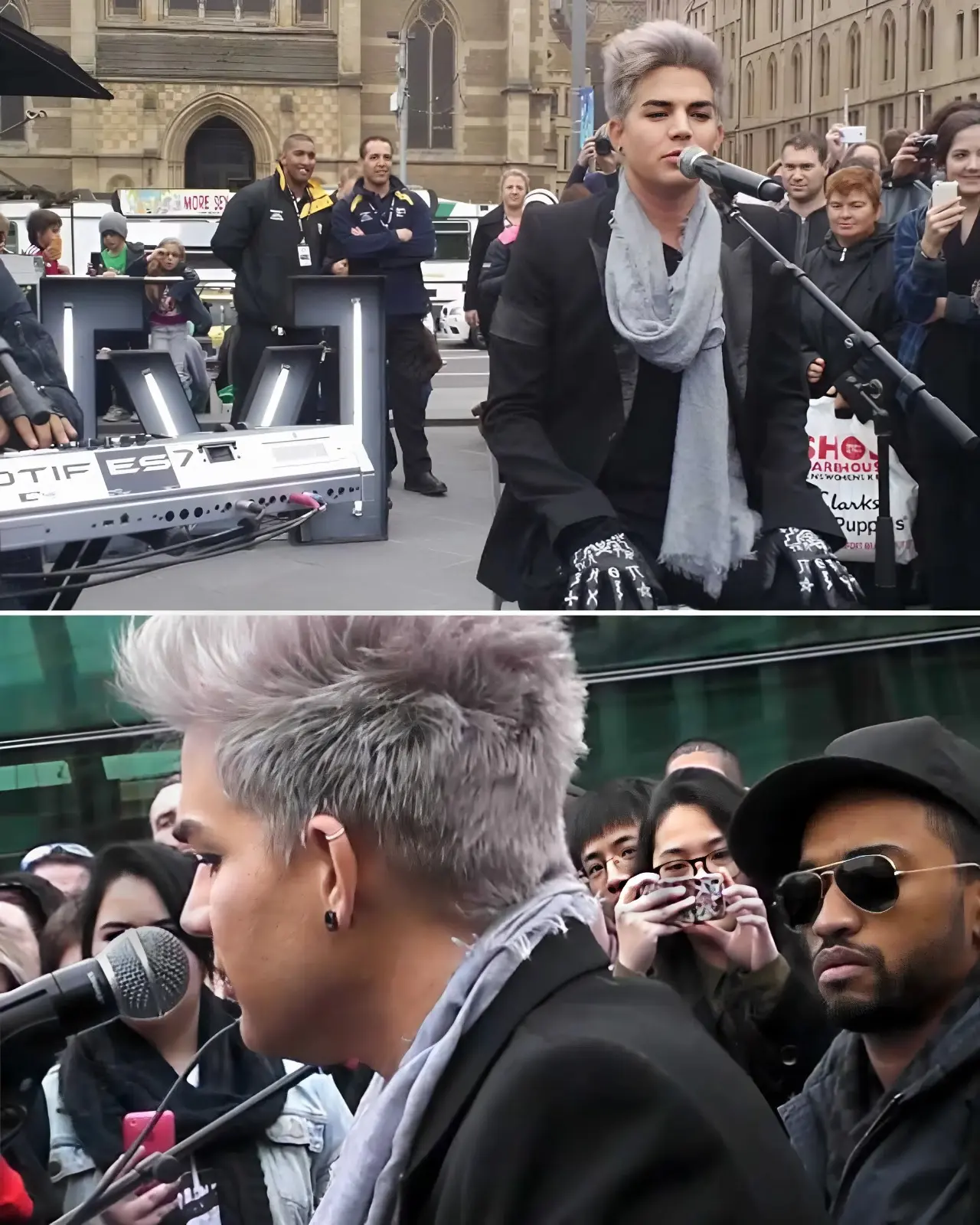
In a dimly lit rehearsal studio, surrounded by amplifiers, guitars, cables and decades of musical history, something extraordinary seemed to be happening.
Queen wasn't simply rehearsing.
The music felt alive.
Not merely louder. Not simply sharper.
Somehow, it felt younger.
And at the center of that renewed electricity was Adam Lambert.
“He makes us feel 25 again,” Brian May says in this imagined celebration of the extraordinary musical chemistry that has defined Queen + Adam Lambert.
It's easy to understand the sentiment.
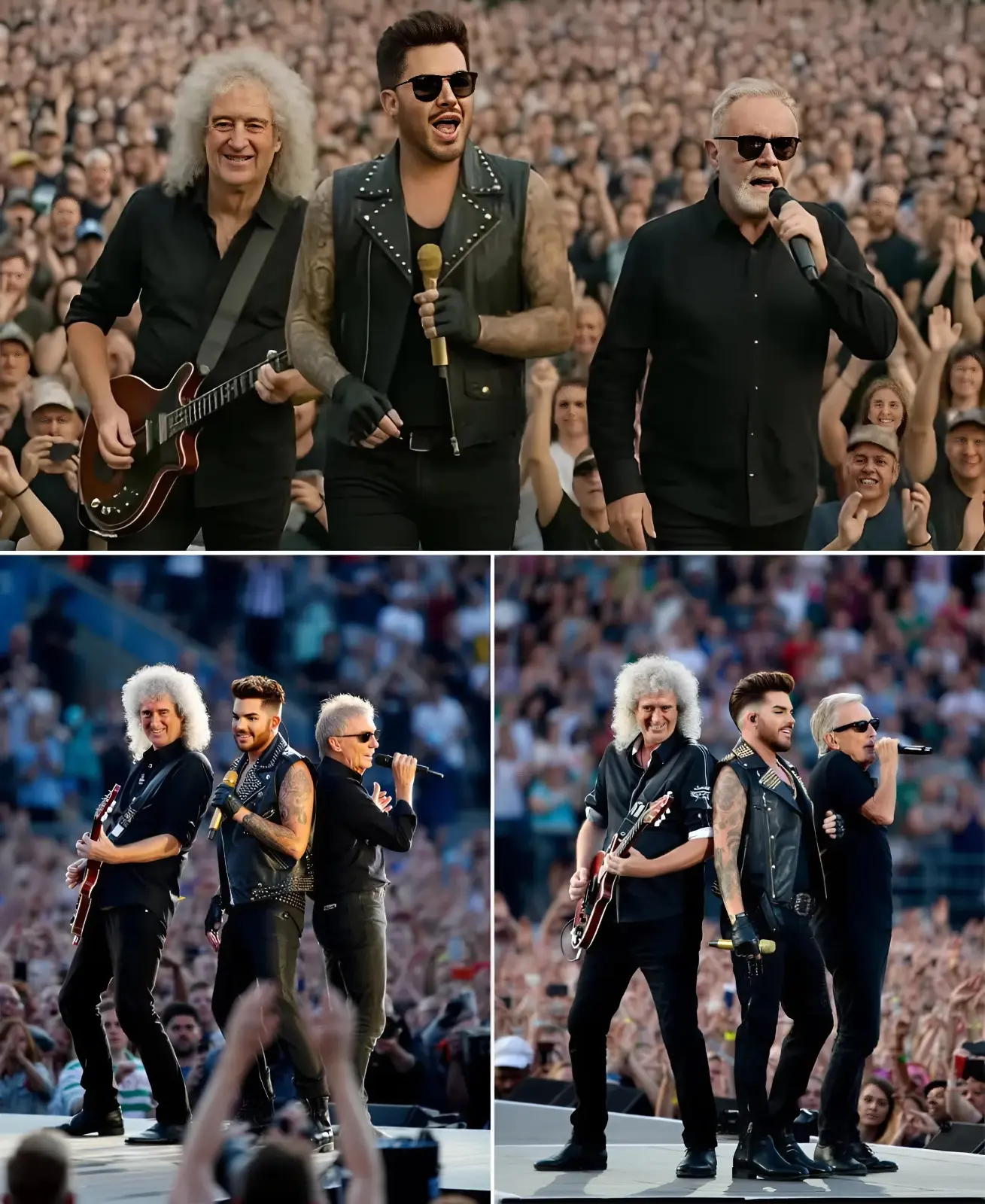
When Lambert steps toward the microphone and Brian May's unmistakable guitar begins to roar beside Roger Taylor's thunderous drums, the years seem to disappear.
Suddenly, Queen isn't a legendary band protecting its past.
It is a living, breathing musical force capable of creating another unforgettable night.
That distinction matters.
From the beginning, Lambert faced an almost impossible assignment.
How do you stand at the front of Queen without being compared to Freddie Mercury?
How do you perform songs that millions of people consider sacred without turning the experience into imitation?
How do you honor one of rock's greatest frontmen while still remaining completely yourself?
Lambert eventually discovered the only answer that could work:
Don't try to become Freddie.
Bring Adam.
Bring the theatricality.
Bring the enormous vocal range.
Bring the glam-rock attitude.
Bring the humor, vulnerability, confidence and unpredictability that made Lambert distinctive long before he began touring with Queen.
And then trust the music.
That approach transformed what could have been a nostalgia project into something far more interesting.
When Lambert sings “Somebody to Love,” “Who Wants to Live Forever,” “The Show Must Go On,” or “We Are the Champions,” he doesn't attempt to reproduce a recording note for note.
He interprets.
He bends phrases.
He attacks certain moments with astonishing force and allows others to become surprisingly intimate.
Most importantly, he understands that Freddie Mercury doesn't need replacing.
Freddie's legacy is untouchable.
Lambert's job is different.
His role is to help these songs continue living in the present.
And beside Brian May and Roger Taylor, that mission has produced an extraordinary musical partnership.
May's guitar still carries one of the most recognizable sounds in rock history.
A single sustained note can immediately transport generations of listeners into Queen's universe.
Taylor remains the rhythmic engine, bringing power and personality to songs he helped create decades ago.
Then Lambert arrives in the middle of that history with something neither musician had when those songs were originally written:
A completely different perspective.
That's where the chemistry becomes fascinating.
Lambert grew up hearing Queen as legend.
May and Taylor lived it.
One side carries the history.
The other carries the perspective of someone inspired by that history.
When those worlds collide, the songs can feel simultaneously familiar and new.
That is why audiences continue responding so intensely.
People may initially buy a ticket because they want to hear the classics.
They want that first explosive guitar line.
They want to throw their hands into the air during “Radio Ga Ga.”
They want to sing “We Will Rock You” with thousands of strangers.
They want that enormous communal moment when “We Are the Champions” fills the arena.
But somewhere during the concert, nostalgia becomes something else.
The audience stops remembering what Queen once was and begins experiencing what Queen is at that exact moment.
That transformation is Lambert's greatest contribution.
He doesn't erase history.
He activates it.
And he does so without pretending the past can be recreated exactly as it happened.
Because it can't.
Freddie Mercury was singular.
There will never be another Freddie.
But the music he helped create was always bigger than one moment in time.
Great songs evolve because new audiences bring new memories to them.
A teenager hearing “Don't Stop Me Now” today experiences it differently from someone who bought the record decades ago.
Yet both can stand inside the same arena and scream the same chorus.
That is musical immortality.
And Queen + Adam Lambert have become one of the most compelling examples of how that immortality can continue onstage.
For Brian May, there must also be something profoundly emotional about hearing these songs roar through arenas again.
He remembers their beginnings.
He remembers tiny rooms before stadiums.
He remembers the experimentation, arguments, breakthroughs and absurd ideas that somehow became masterpieces.
He remembers Freddie.
And now, decades later, he can look across a stage and see another extraordinary vocalist refusing to treat those songs like museum pieces.
Lambert attacks them.
Challenges them.
Plays with them.
Sometimes he makes them glamorous.
Sometimes darker.
Sometimes more vulnerable.
And sometimes he simply unleashes that extraordinary voice and lets the arena erupt.
Roger Taylor's drums answer.
May's guitar screams.
And suddenly the calendar becomes irrelevant.
1975?
2026?
For the length of a song, who cares?
Rock music has never been particularly interested in behaving according to age.
That's the point.
It is supposed to be rebellious.
Excessive.
Emotional.
A little dangerous.
And unapologetically alive.
That is why the idea of Queen continuing to evolve matters.
This isn't about pretending nothing has changed.
Everything has changed.
The world.
The audience.
The musicians themselves.
But evolution doesn't erase legacy.
Sometimes evolution protects it.
And Adam Lambert has helped demonstrate that honoring musical history doesn't mean freezing it in place.
Sometimes the greatest respect you can show a song is having the courage to make it breathe again.
That's what happens when Lambert walks onto a Queen stage.
He isn't Freddie Mercury.
He doesn't need to be.
He's Adam Lambert — standing beside two rock legends and bringing his own voice into one of music's greatest catalogs.
And perhaps that's exactly why it works.
Brian May brings the guitar.
Roger Taylor brings the thunder.
Adam Lambert brings the spark.
Together, they bring the songs back into the present.
Not as replicas.
Not as memories.
But as living music.
So forget the idea of simply looking backward.
This is celebration.
This is reinvention.
This is proof that a legendary song doesn't become old merely because decades have passed since it was written.
Put the right musicians onstage.
Turn the amplifiers up.
Let Brian May strike that first chord.
Let Roger Taylor count them in.
Then hand Adam Lambert the microphone.
And watch history catch fire again. 🔥👑🎤