🚨 WNBA SHOCKWAVE: SOPHIE CUNNINGHAM AND PAULA CUNNINGHAM TEAR UP ON LIVESTREAM, MAKING AN ANNOUNCEMENT THAT LEFT THE ENTIRE INTERNET SPEECHLESS!
Social media went into a frenzy last night when Indiana Fever star Sophie Cunningham and her mother Paula Cunningham unexpectedly sat side-by-side in an unannounced livestream straight from their family home in Missouri.
With thousands of Fever Nation supporters frantically dropping comments, Paula suddenly took Sophie's hand, breathed in deeply, and looked straight into the camera to deliver the line that stunned viewers:
“We’ve been waiting for the right time… and that time is now.”
Tears welling in her eyes, Sophie Cunningham smiled at her mother, leaned close to the screen, and added:
“We want to share something very important with all of you…”
And in that exact moment, the internet completely exploded! What actually happened between the Indiana Fever star and her beloved mother?
👇 Read the full detailed post in the very first comment below! 👇
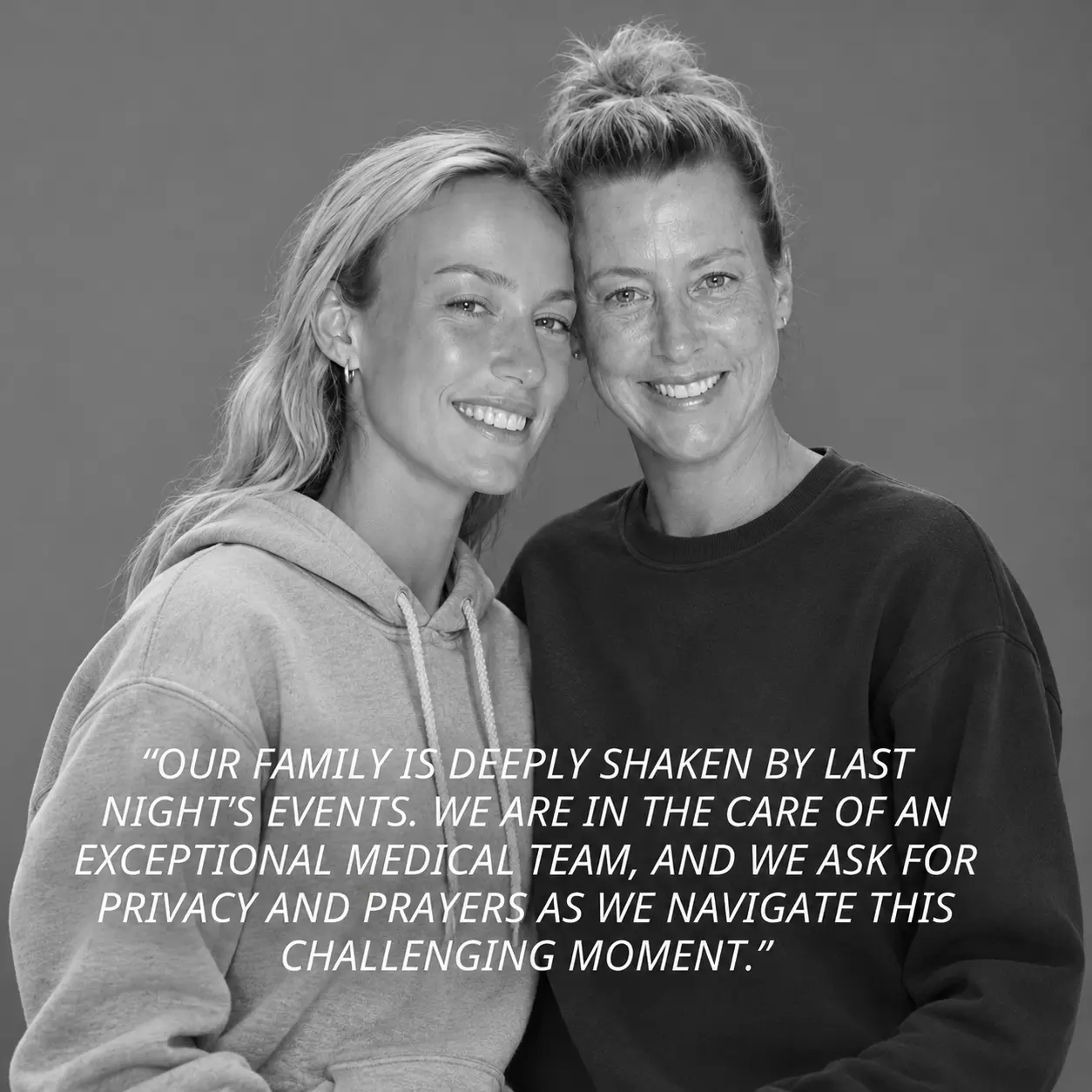
For Indiana Fever supporters, Sophie Cunningham has become a familiar symbol of determination, confidence, and competitive passion. Her energy on the basketball court and outspoken personality have helped her connect with fans who admire athletes willing to give everything for their teams.
But in this imagined story, the WNBA star captures attention for a completely different reason.
There are no basketball highlights.
No dramatic game-winning shots.
And no discussion of professional rivalries.
Instead, Sophie appears beside her mother, Paula Cunningham, for an emotional conversation about family, gratitude, and a deeply personal dream they have quietly shared for years.
The fictional livestream begins on a peaceful evening.
Sophie sits on a comfortable sofa wearing a simple white sweater, while Paula sits beside her in a dark blue cardigan.
Family photographs decorate the background.
A small lamp casts warm light across the room.
At first, the atmosphere feels relaxed.
Sophie smiles at the camera and greets viewers.
"Hey, everybody. I know this is a little unexpected," she says in imagined dialogue.
Paula laughs softly.
"We weren't exactly planning on doing something like this."
Within the fictional narrative, comments begin appearing rapidly.
Supporters ask whether Sophie has important basketball news.
Others wonder whether she is preparing to announce a new project.
Some simply express excitement at seeing mother and daughter together.
But Sophie shakes her head.
"Tonight isn't really about basketball," she explains.
She looks toward Paula.
"It's about something that's been on our hearts for a long time."
The atmosphere becomes more serious.
Paula reaches for her daughter's hand.
For several seconds, neither speaks.
Then Paula delivers the emotional statement that begins the announcement.
"We've been waiting for the right time… and that time is now."
Sophie takes a breath.
Her eyes begin filling with tears.
"We want to share something very important with all of you," she says.
The fictional viewers wait anxiously.
Then Sophie reveals the reason for the livestream.
She and her mother are announcing an imagined charitable initiative dedicated to helping young girls from underserved communities pursue basketball and educational opportunities.
The fictional program, called The Cunningham Family Dream Project, would provide sports equipment, mentorship, and financial assistance for youth participation in organized basketball.
For Sophie, the imagined announcement represents something deeply meaningful.
It is not simply about creating another community program.
It is about recognizing the sacrifices families make when supporting children's ambitions.
As the fictional livestream continues, Paula begins reflecting on Sophie's childhood.
She remembers the excitement of watching her daughter discover basketball.
She recalls the determination Sophie demonstrated while learning new skills.
And she remembers the long hours involved in supporting a young athlete's development.
In imagined dialogue, Paula says, "When Sophie was little, she had this incredible energy. She wanted to compete, improve, and prove to herself that she could do difficult things."
Sophie laughs.
"I probably drove everybody crazy."
Paula smiles.
"Sometimes."
The two share a brief moment of laughter.
Then Paula continues.
"But I also remember how much you cared. Even when you were disappointed, you wanted to come back and try again."
Her voice begins trembling.
The fictional moment becomes emotional as Paula reflects on the importance of encouragement.
She explains that children often need someone who believes in them before they fully believe in themselves.
A supportive parent can help a child recover from disappointment.
A patient coach can encourage improvement.
And a mentor can provide reassurance when an ambitious goal feels impossible.
In the imagined story, Sophie nods while listening.
"That's why this means so much to me," she says. "I know how fortunate I was to have people encouraging me."
She pauses.
"Not every kid has the same opportunities."
The statement becomes the central message of the fictional announcement.
Youth sports can offer valuable experiences, but participation sometimes involves significant expenses.
Equipment, transportation, registration fees, and training opportunities may create barriers for families.
Those challenges can prevent talented and enthusiastic children from participating consistently.
The imagined Cunningham Family Dream Project aims to address some of those obstacles.
Through equipment donations, community partnerships, and mentorship opportunities, the fictional initiative would help young athletes experience the benefits of organized basketball.
But Sophie explains that the project would not focus exclusively on developing professional players.
Instead, its purpose would be to encourage confidence, teamwork, and personal growth.
"Not every girl who picks up a basketball is going to play in the WNBA," Sophie says in fictional dialogue. "And that's completely okay."
She smiles.
"Basketball can still teach her discipline, friendship, resilience, and the courage to believe in herself."
Paula nods proudly.
For her, the imagined program represents an opportunity to extend the encouragement she offered her daughter to other families.
As the fictional livestream continues, Sophie reveals that the project would include a special mentorship component.
Young athletes would have opportunities to speak with experienced coaches, former players, and community volunteers.
They could ask questions about balancing education with sports.
They could learn strategies for responding to setbacks.
And they could receive encouragement from people who understand the challenges associated with pursuing ambitious goals.
The imagined program would also recognize parents and caregivers.
Sophie explains that family members often make sacrifices that go unnoticed.
They arrange transportation.
They attend games.
They help children manage disappointment.
And they provide emotional support during demanding periods.
In fictional dialogue, Sophie turns toward her mother.
"Mom, people see me playing basketball now, but they don't see all the things you did when nobody was watching."
Paula looks down.
Sophie continues.
"They don't see the early mornings, the long drives, or the times you reminded me that one bad game didn't define me."
Her voice trembles.
"And I don't think I've ever thanked you enough."
The imagined livestream becomes quiet.
Paula wipes away a tear.
"You never had to thank me," she says softly. "Watching you grow into the person you are has always been enough."
Sophie embraces her mother.
For several moments, neither speaks.
The fictional audience responds with an outpouring of supportive comments.
One imagined viewer writes, "This is what family love looks like."
Another comments, "Behind every athlete is a story of sacrifice and encouragement."
A third adds, "What an incredible way to give back to the next generation."
The imagined reactions reflect the emotional appeal of the announcement.
Professional athletes are often celebrated for their individual accomplishments.
Fans remember important performances, memorable victories, and extraordinary statistics.
But those achievements rarely happen without support.
Coaches provide guidance.
Teammates offer encouragement.
Families create opportunities.
And communities help young athletes discover their potential.
For Sophie, the fictional initiative becomes a way to recognize those contributions.
As the livestream continues, Paula shares another imagined childhood memory.
She recalls a tournament where Sophie became frustrated after a disappointing performance.
On the drive home, her daughter barely spoke.
Paula eventually asked what was wrong.
"I just don't think I'm good enough," Sophie replied in the imagined memory.
Paula reassured her.
"One game doesn't decide who you are. What matters is whether you're willing to keep learning."
Years later, Sophie remembers that conversation.
In the fictional livestream, she explains that the message helped her develop a healthier understanding of competition.
Success was not about avoiding mistakes.
It was about responding to them constructively.
That lesson became especially meaningful as basketball grew more demanding.
Professional athletes face pressure from opponents, supporters, and their own expectations.
They must learn how to remain confident through uncertainty.
And they need relationships that remind them their value extends beyond athletic performance.
In the imagined story, Sophie credits her mother with helping her understand that distinction.
"She always wanted me to work hard," Sophie says. "But she never made me feel like I had to win every game to deserve love."
The statement becomes another emotional highlight.
For Paula, the fictional project represents a continuation of that philosophy.
She hopes young athletes will learn to appreciate effort, character, and personal development.
She also hopes families will recognize the importance of encouragement.
"Sometimes the most important thing you can tell a child is simply, 'I believe in you,'" Paula says in imagined dialogue.
The fictional livestream approaches its conclusion with a final announcement.
Sophie explains that the imagined initiative would begin with a youth basketball community event in Indianapolis.
Children would participate in skills activities, meet volunteer mentors, and receive encouragement from experienced basketball supporters.
Families would also have opportunities to learn about accessible sports programs.
The event would celebrate participation rather than competition alone.
Its message would be that every child deserves the chance to discover their abilities.
As Sophie describes the plans, her excitement becomes increasingly visible.
The tears that appeared earlier give way to a hopeful smile.
For her, the fictional project represents a new way to use the opportunities created by professional basketball.
She cannot guarantee that every young athlete will achieve a professional career.
But she can imagine helping children gain confidence and develop meaningful relationships through sports.
Paula turns toward her daughter.
"I'm proud of what you've accomplished," she says in fictional dialogue. "But I'm even prouder that you want to help other people."
Sophie smiles through tears.
"That's because you taught me how important it is."
The two embrace again.
The imagined viewers respond with messages of appreciation.
Some share memories of parents who supported their own ambitions.
Others thank coaches who encouraged them during difficult periods.
Several describe the importance of community programs that helped them participate in youth sports.
The fictional conversation becomes a celebration of gratitude.
It reminds viewers that meaningful achievements often begin with ordinary acts of kindness.
A parent offering reassurance.
A coach providing patient instruction.
A volunteer donating time.
Or a community organization creating opportunities for children who might otherwise be excluded.
As the fictional livestream draws to a close, Sophie offers one final message.
"If there's one thing I hope people take away from tonight, it's that nobody reaches their dreams completely alone."
She pauses.
"And if you've been fortunate enough to have someone believe in you, maybe the greatest thing you can do is become that person for somebody else."
Paula nods.
"That's what this is all about."
The imagined livestream ends with mother and daughter smiling together.
There is no tragic revelation.
No confirmed family emergency.
And no secret announcement involving Sophie's professional future.
Instead, the fictional moment celebrates family, gratitude, and the importance of creating opportunities for others.
For Indiana Fever supporters, the imagined story offers a reminder that professional basketball can inspire far more than excitement during games.
Athletes can encourage young people to pursue ambitious goals.
They can celebrate the contributions of families and mentors.
And they can demonstrate how personal experiences may inspire meaningful community involvement.
The fictional announcement is not a verified livestream or an actual charitable initiative launched by Sophie and Paula Cunningham.
It is an imagined reflection on the relationship between a mother and daughter and the values that can shape a young athlete's development.
Because the greatest achievements are not always measured through championships, statistics, or public recognition.
Sometimes, they are reflected in the confidence of a child who finally believes a dream is possible.
And sometimes, they begin with a mother who refuses to stop believing in her daughter.
For Sophie Cunningham, Paula Cunningham, and Fever Nation, this fictional emotional moment carries one powerful message: the greatest way to honor the people who helped you succeed is to help someone else discover their own potential. ❤️🏀